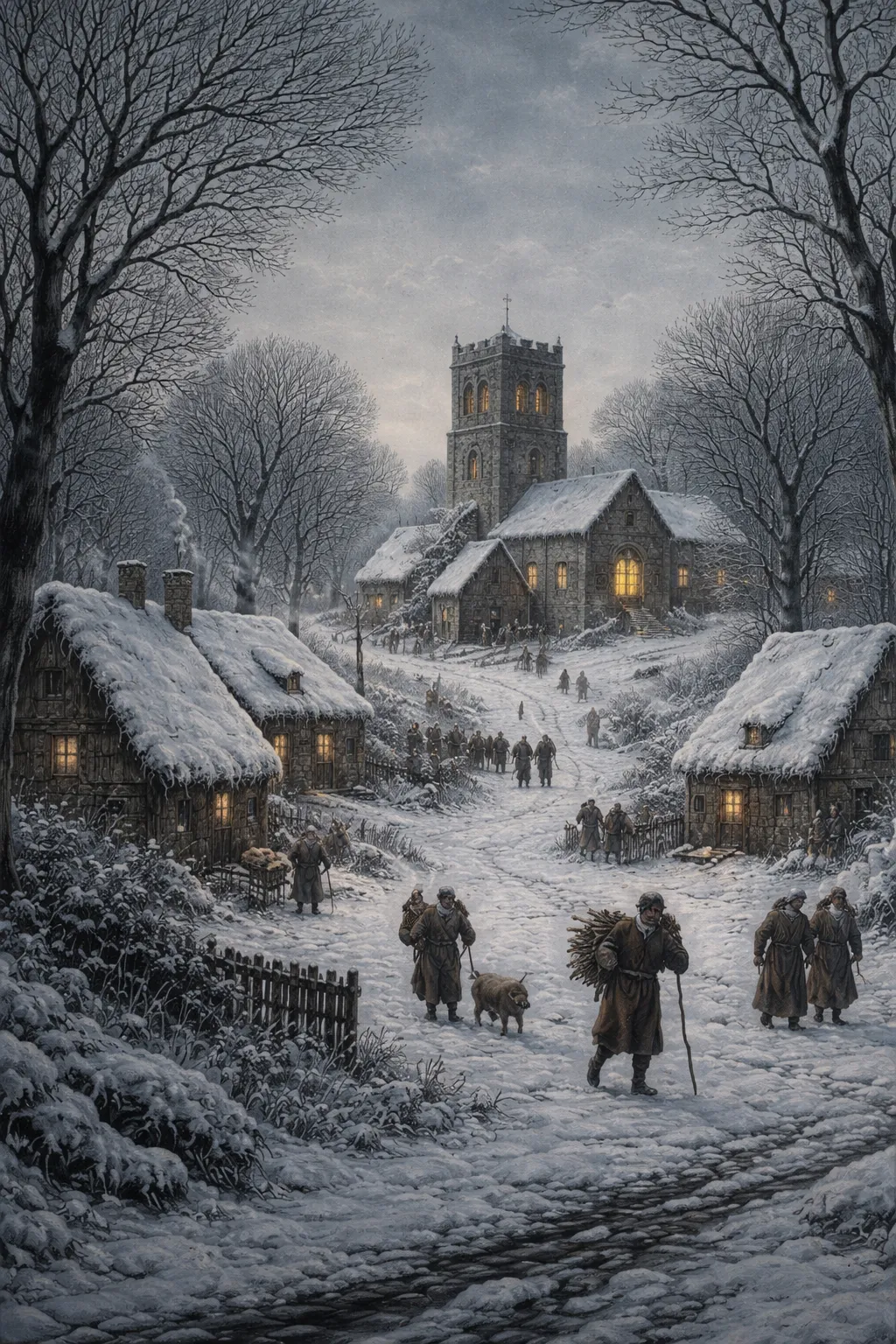
Christmas in a Medieval Village
When we imagine Christmas in a medieval village, it’s tempting to picture feasting, merriment, and cosy scenes by the fire.
In reality, Christmas arrived quietly — in the middle of winter, in a world already shaped by cold, hunger, and routine.
For most villagers, Christmas wasn’t a break from hardship. It was a pause within it.
Where Christmas sat in the year
Christmas fell at the darkest point of the year.
By December:
- the harvest was long finished
- animals had already been slaughtered
- food stores were carefully rationed
- daylight was short and work was harder
Winter had already settled in. Christmas didn’t interrupt it — it simply arrived in the villagers daily lives.
Advent came before celebration
Before Christmas Day itself came Advent, and this mattered.
Advent was a time of restraint, fasting on certain days, and increased church attendance.
It wasn’t a countdown to indulgence. It was preparation — spiritual rather than celebratory, where enjoyment was expected to wait.
What villages actually did to prepare
Preparation was practical, not festive.
Food had been preserved earlier in the season: salted meat, dried peas, beans, bread.
Ale and mead were brewed weeks before.
Candles were made or gathered — light mattered deeply in winter.
Evergreens like holly and ivy were brought into the church.
Most households did very little that looked like “Christmas prep” as we’d recognise it.
The church did far more than individual homes.
What made Christmas different
Christmas Day itself did stand out — just quietly. There were no piles of gifts, no decorations in every cottage, and no long holidays. But there was structure, meaning, and shared time.
There would have been a better meal, not a feast. Sometimes the villagers would have been allowed to have a pause in their work. Rents, courts, or labour services might be delayed.
It was all about community.
The day revolved around the church first, not the home.
You can almost say: “It wasn’t magical — but it mattered.
What Christmas felt like
Christmas in a medieval village was cold, dark, religious, communal. It was slightly kinder than an ordinary winter’s day.
It wasn’t magical. It wasn’t abundant.
But in a hard season, it mattered.