What Happened When You Broke the Rules in a Medieval Village?
Medieval villages are often imagined as strict, church-ruled places where everyone behaved, obeyed, and quietly accepted their lot in life.
Reality?
People were human. Humans bend rules. Humans break rules. And medieval England — around 1307 included — had plenty of ways of dealing with that.
Some punishments were practical. Some were humiliating. Some were oddly petty. And some were just… very medieval.
Let’s wander into the village and see what could happen.
First: Whose Rules Were You Breaking?
Life in a medieval village wasn’t governed by one neat system. It was a tangle of overlapping authority:
- The church
- The lord of the manor
- The manor court (hallmote)
- Local custom, which often mattered more than written law
Everyone knew the expectations, even if they couldn’t read them. They were spoken, remembered, repeated, enforced by neighbours… and sometimes gossiped about endlessly.
The Village Court: Where Everyday Trouble Went
Most village rule-breaking was handled locally in the manor court. This wasn’t a grand courtroom drama. It was:
Held in a hall, barn, or open space.
- Villagers attending as witnesses
- Officials chosen from the village
- The lord’s steward presiding
Imagine something between a council meeting, a neighbourhood watch committee, and an extremely nosy village gathering… with fines at the end.
People were summoned for things like:
- Not maintaining hedges and boundaries
- Letting animals wander into others’ crops
- Refusing to do their feudal duties
- Brewing illegal ale
- Stealing wood from the lord’s land
- General trouble-making
Punishment?
Almost always a fine.
Small, annoying, but painful in a poor household.
And here’s the thing: People broke rules again anyway. Because sometimes you needed to.
Shame Was a Powerful Weapon
Money wasn’t the only punishment medieval society relied on.
There was also humiliation.
And medieval England really leaned into public embarrassment as a way to remind everyone of “their place.”
Depending on place and period, this could include:
The Stocks
Sit in public. Hands or feet restrained. Everyone can see you. People might laugh, throw things, mutter opinions they had quietly held anyway.
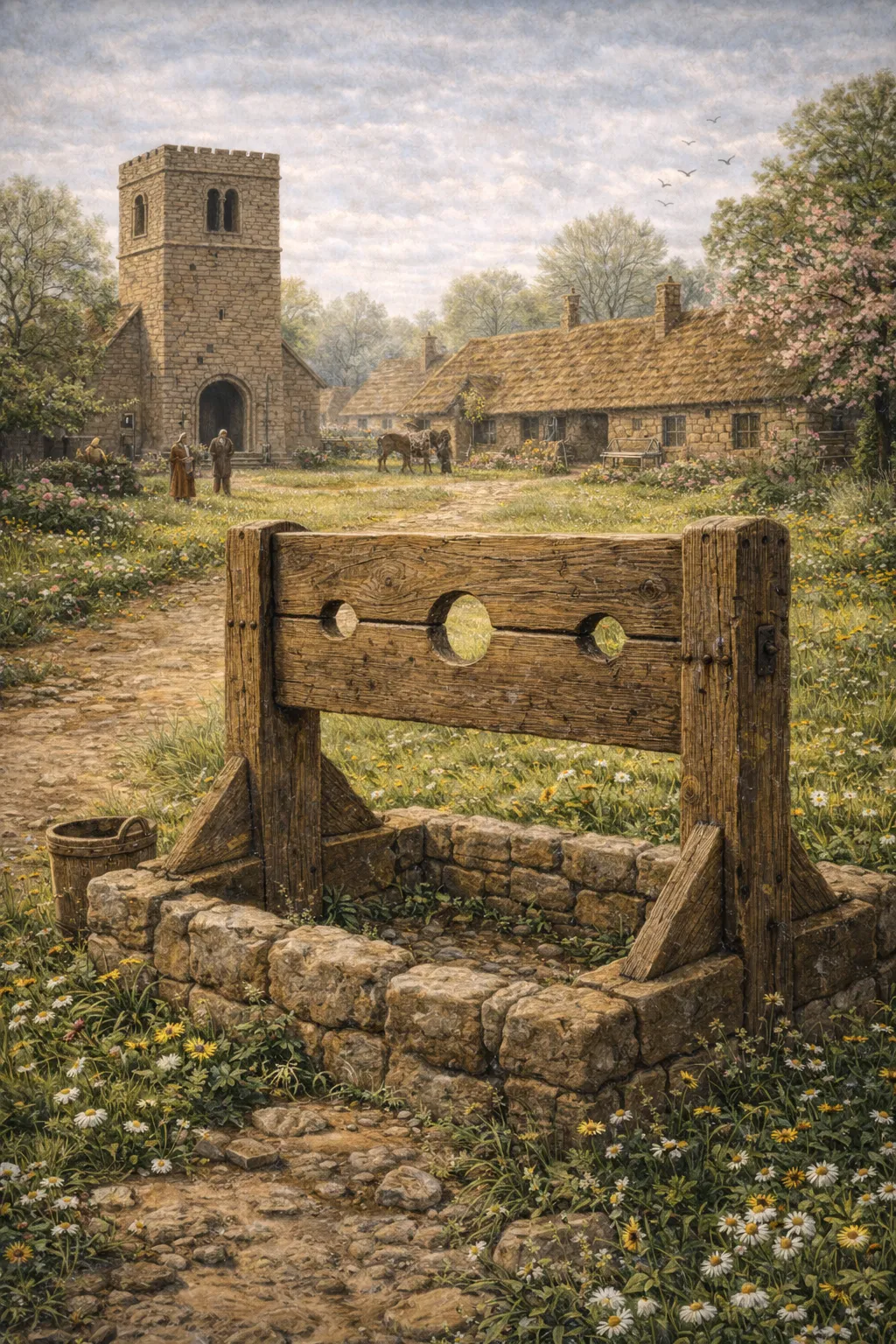
It wasn’t about physical pain. It was about everyone knowing you messed up.
The Pillory
Like the stocks, but upright and usually harsher. Used for more serious wrongs like cheating markets or dishonest selling.
It shouted: “This person betrayed the community’s trust.”
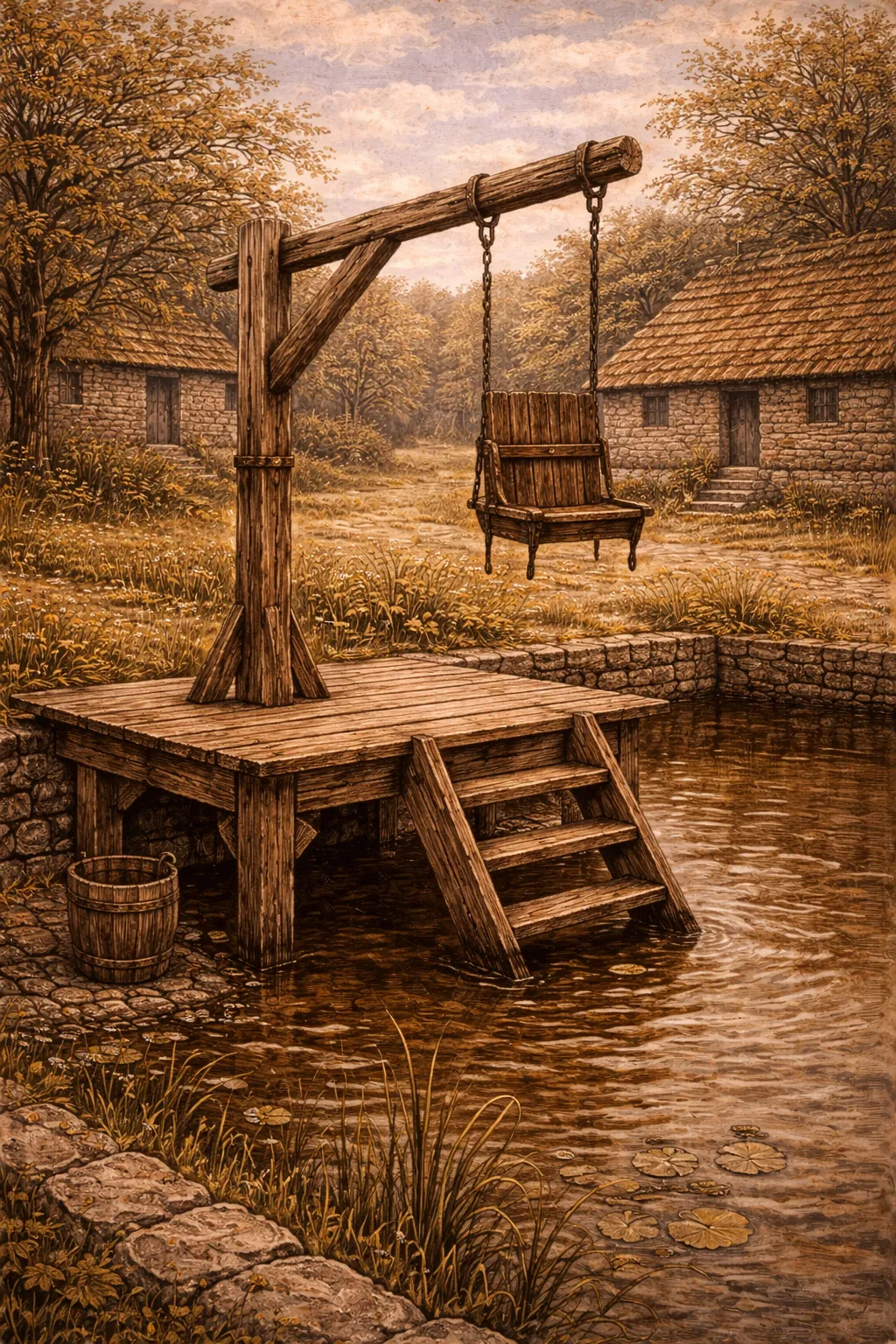
The Ducking Stool
Mostly (not entirely) associated with women accused of being:
- Scolds
- Troublemakers
- Gossipers
- “A nuisance”
Was it used constantly everywhere? No.
Was it symbolic of how society tried to silence certain behaviour? Absolutely.
Again — humiliation as control.
When the Church Got Involved
Break church rules? Different consequences.
No tithes? Public penance.
Moral “misbehaviour”? You might stand in church in your shift, confess, or perform acts of repentance.
The church didn’t always punish with violence. But guilt? Judgment? Shame?
They were excellent at that.
And medieval villagers cared about their souls — deeply.
“Small Crimes” Were Often Very Human Problems
A lot of “rule-breaking” wasn’t wickedness.
It was survival.
Why would someone…
Steal wood? Because winter was cold.
Poach a rabbit? Because hunger hurts.
Brew ale illegally? Because they needed coin.
Graze animals where they shouldn’t? Because pasture was scarce.
Behind every rule broken was usually a very real life squeeze.
Medieval justice wasn’t kind.
But it wasn’t cartoon-villain cruel either.
It existed in a world where life was fragile, resources were tight, and every boundary mattered.
Sometimes, People Simply… Got Away With It
Villages were close communities.
That meant:
- Neighbours quietly helping each other
- Things turning a blind eye
- Complaints happening only when tempers truly snapped
People lived together their whole lives. You didn’t punish someone out of existence. You still had to see them tomorrow.
So the village balanced order and tolerance constantly. Rules mattered. So did people.
So, What Happened When You Broke the Rules?
In short:
- You were noticed
- You were probably fined
- You may be shamed
- You were reminded you’re part of a system
and life… carried on
Medieval life wasn’t chaos. But it also wasn’t relentlessly severe.
It was human — disciplined, flawed, frustrating, communal, sometimes unfair, sometimes surprisingly forgiving.